Describe the fruit-piece range
Send representative product, including the largest normal pieces and their distribution. Assess passage through the proposed transfer and filling route and inspect whether the pieces remain acceptable after dosing.
Plan jam and preserve filling using your product range, representative jars and intended filling conditions. Review target fill, the jar opening, closing, cleaning and changeovers together, then agree checks for the finished pack before specifying the line.
Speak directly with Lancing about jam and preserve jar filling.
Provide the jam formulation characteristics, filling temperature and jar range, including fruit-piece variation where relevant. Trial product transfer, dosing and nozzle cut-off using representative batches. Agree how filled weight is checked and how the jar reaches closing, while confirming the thermal process with the responsible product team.
Compare jam-filling trial decisions Assess fruit pieces, dose variation and clean jar rims throughout a representative batch.
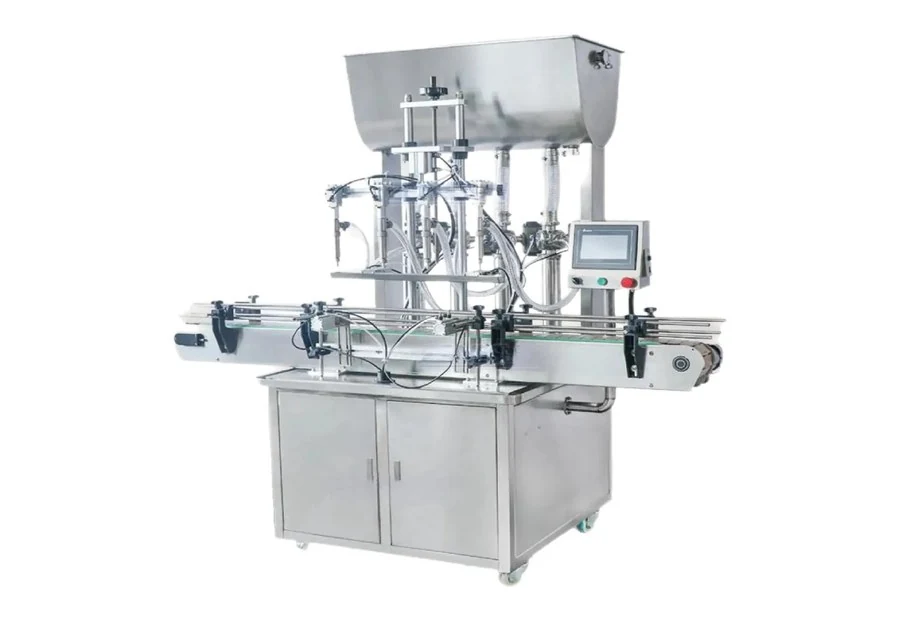
Example shown on Lancing’s Jam & Sauce Production website. Confirm suitability for your jam, fruit-piece range, filling temperature and jars through representative trials.
View the source equipment exampleSmooth jam, preserves with pieces and different jar openings can create different filling and handling requirements even when the target weight is the same.
Send representative product, including the largest normal pieces and their distribution. Assess passage through the proposed transfer and filling route and inspect whether the pieces remain acceptable after dosing.
Record the temperature and consistency at filling and how these vary through the run. The responsible product team should define the process conditions; a filler quotation should not invent a thermal recipe.
Provide the smallest opening, jar height and normal dimensional variation. Trial positioning and cut-off so product reaches the jar without contaminating the rim or obstructing the closing operation.
State the target fill and how it will be checked. Where a volumetric method is considered, verify filled weight with the real product instead of assuming one setting guarantees the same mass across every batch.
Show how filled jars leave the nozzle and reach capping or other closing. Include queueing, spills, container stability and access for inspecting the rim and closure.
List the recipes, jar sizes and production order. Identify contact parts, settings and cleaning tasks that change between runs, then include those activities in the capacity comparison.
The right choice changes with jam & preserve jar filling product behaviour, container, bag or pack range, your line layout and required results.
Define fill checks, rim cleanliness, visible product condition and the closing result before testing. Retain samples at the start, during steady running and after a planned interruption.
Record product batch and condition, jar reference, settings, filled-weight observations, rejects and interventions. This makes it possible to distinguish a dosing problem from inconsistent product supply or poor jar presentation.
Provide representative jam or preserve, empty jars and closures, target fill and production pattern. Include current packing difficulties such as fruit damage, drips, slow changeovers or irregular jar feeding.
Use the jam filling machines specification checklist to prepare the application, then agree the acceptance checks and production records before comparing proposals.
Your final solution for jam and preserve jar filling must reflect the law, current standards and site-specific risks that apply to your installation.